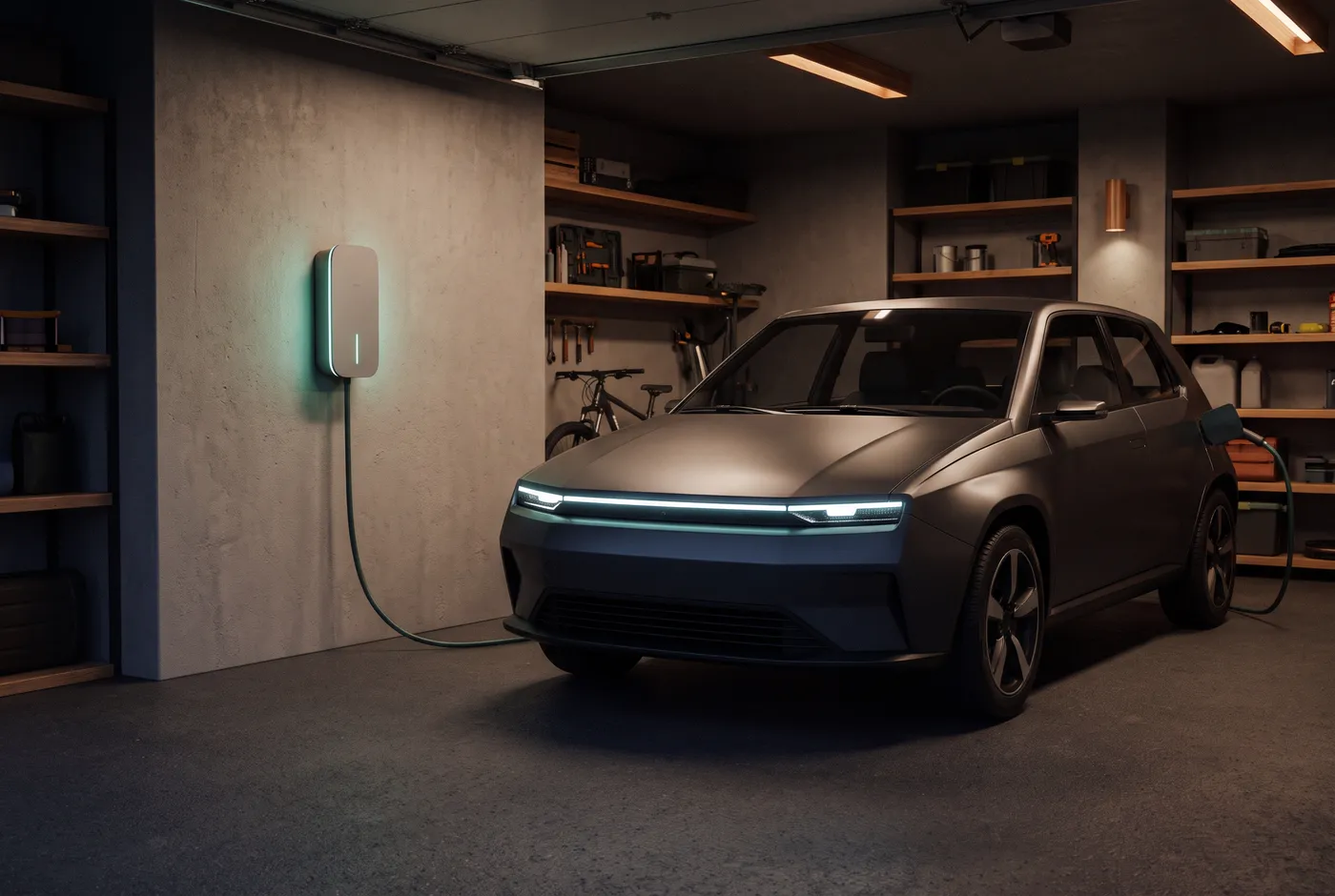

A wallbox is quickly ordered, but not always quickly installed. Before electricity flows into the car, the home wiring, the grid operator and, in an apartment building, often the co-owners all have a say. Knowing the right order saves time and avoids costly retrofits. This guide describes the rules that apply in Germany.
Registered electrician and site survey
It all starts with a look at the electrical installation. A registered electrical contractor checks whether the house connection, meter cabinet and cable routes can carry the additional load. A wallbox draws high currents for hours, unlike a cooker, which runs at full power only briefly. You need a dedicated supply cable, suitable circuit protection and a residual current device that also detects DC fault currents. Many wallboxes already have integrated detection for this. Installation is not a DIY project. It makes sense to plan conduits or spare capacity for a second charging point or a later solar PV system straight away.
Notification or consent
Under Germany’s Low Voltage Connection Ordinance (NAV), every charging device for electric vehicles must be notified to the grid operator before it is put into operation, regardless of its power. If the total rated power of the charging devices exceeds 12 kVA per electrical installation, the grid operator’s prior consent is also required. In practice this affects 22 kW wallboxes, but also two 11 kW wallboxes on the same connection. The grid operator must respond within two months. The notification is usually handled by the electrical contractor, often via an online portal run by the grid operator.
11 or 22 kW
For most households, 11 kW is enough. Many electric cars charge at no more than 11 kW on alternating current anyway, because their on-board charger cannot handle more. A 22 kW wallbox saves these cars no time. Even an 11 kW wallbox fully charges typical batteries overnight. An example: anyone who drives 50 kilometres a day and uses around 20 kWh per 100 kilometres needs to recharge about 10 kWh. An 11 kW wallbox manages that in around an hour, plus small charging losses. 22 kW makes sense mainly if the vehicle actually supports it and short stops during the day are to be used for charging. The charging time calculator shows how long a charging session takes in your case.
Charging time calculatorFrom 10 to 80 per cent: how long it takes at a wallbox and at a rapid charger.Controllable consumer device under § 14a EnWG
Private wallboxes with a connected load of more than 4.2 kW that have gone into operation since 1 January 2024 count as a controllable consumer device under Section 14a of the German Energy Industry Act (EnWG). The grid operator may temporarily reduce their power draw if the local grid threatens to become overloaded, but never below 4.2 kW. So the car keeps charging. In return, operators pay reduced grid fees. Under the rules of the Federal Network Agency (Bundesnetzagentur), grid operators may also no longer refuse or delay the connection of new wallboxes by pointing to possible local bottlenecks. Which fee model suits you depends on the grid area and your consumption; grid operators and electricity suppliers can advise.
Apartment buildings and renting
Since Germany’s Condominium Modernisation Act (WEMoG) of 2020, flat owners can demand reasonable structural changes that serve the charging of electric vehicles. The owners’ meeting decides on the “how” (such as the cable route, load management or the sharing of costs). Tenants can also ask their landlord to permit structural changes for charging, provided this is reasonable for the landlord. In larger buildings, a joint concept with load management pays off, so that further charging points remain possible later without a new house connection.
- Commission a registered electrical contractor to carry out an on-site inspection.
- Look up the maximum AC charging power of your own car.
- Allow time for notification and, where applicable, consent from the grid operator.
- Clarify controllability under § 14a EnWG and the fee model.
- Submit your request to the owners’ association or the landlord early.
Funding programmes for private charging points change frequently. Current offers are listed by municipalities, federal states and energy suppliers. For legal questions about owners’ associations or tenancy agreements, property managers, tenants’ associations or a lawyer can help.
When you receive a quote from an electrical contractor, check that notification to the grid operator, residual current protection and a commissioning report are explicitly included.
Frequently asked questions
Can I connect a wallbox myself?
No. Connection and commissioning belong in the hands of a registered electrical contractor, who usually also handles the notification to the grid operator.
Does an 11 kW wallbox need approval?
A single 11 kW wallbox must be notified to the grid operator, but does not need its approval. Consent is only required once the charging devices together exceed 12 kVA per electrical installation.
What does “dimming” under § 14a EnWG mean in everyday life?
The grid operator may only reduce the charging power when the grid threatens to become overloaded, and only temporarily. At least 4.2 kW always remains available.