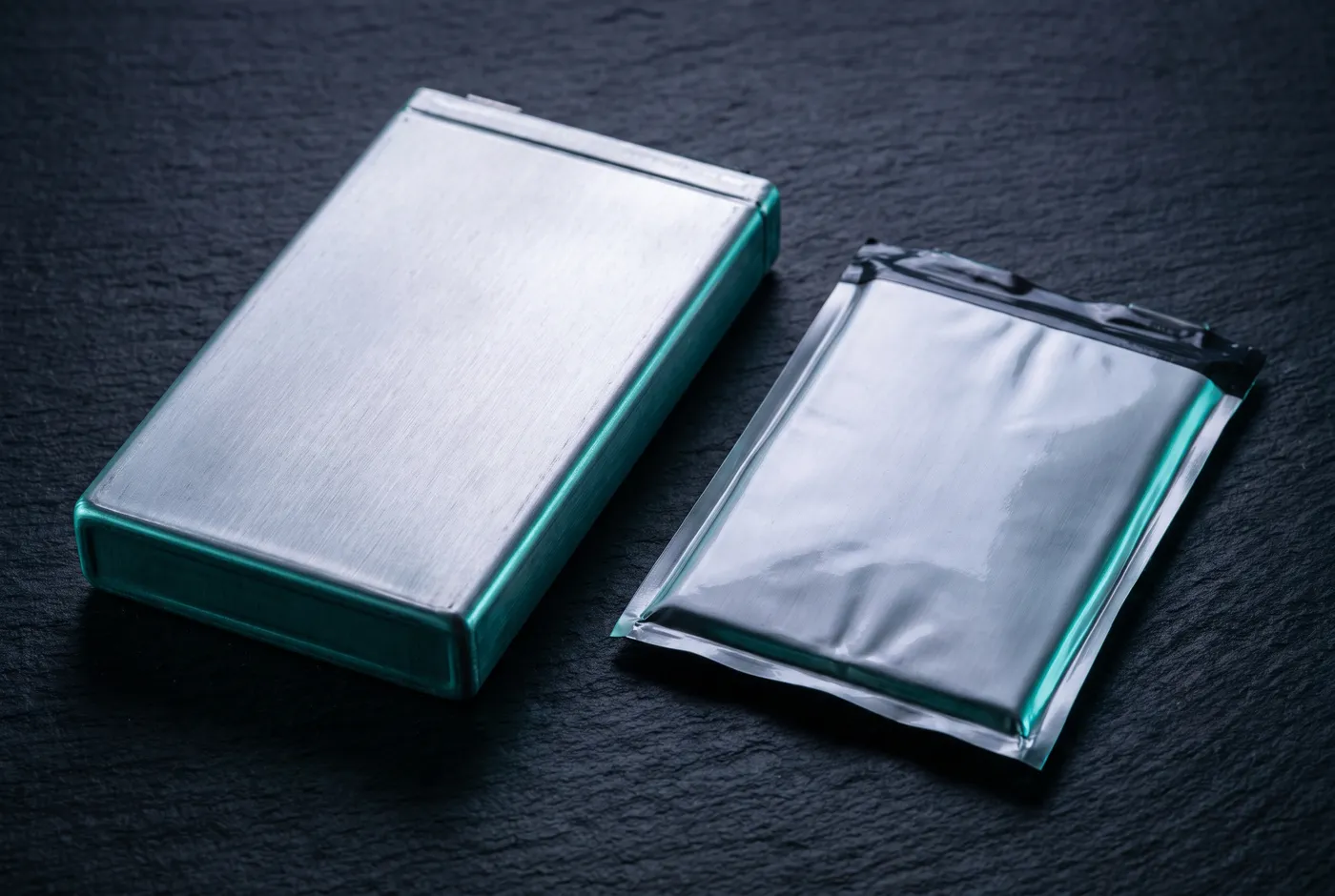

An electric car’s data sheet usually lists only the capacity in kilowatt hours. The cell chemistry behind it matters at least as much. Two families dominate in passenger cars: LFP (lithium iron phosphate) and NMC (nickel manganese cobalt). Both are mature, and both work reliably. But they differ in properties that can tip the balance depending on how you drive.
Energy density: how much range fits in the pack
NMC cells store noticeably more energy per kilogram and per litre. That allows long ranges with acceptable weight and space requirements. Long-distance models and high-performance vehicles therefore often rely on NMC. LFP needs more weight and volume for the same capacity. Newer designs, in which the cells go straight into the pack without intermediate modules, have, however, narrowed the gap considerably at pack level.
In everyday terms, this means that for the same range an LFP car is usually somewhat heavier, or for the same weight it offers slightly less range. On short and medium journeys this rarely matters. On long trips with few charging stops and in sporty vehicles, it carries more weight.
Service life and safety
LFP leads on cycle life. The chemistry tolerates a very large number of charge and discharge cycles before its capacity drops noticeably. That pays off at high mileages, for example in taxi, delivery or fleet operation. It also offers high thermal stability: LFP cells react far more benignly to overheating or damage than nickel-rich cells. In addition, LFP does without nickel and cobalt, which lowers costs and raw material risks.
That does not make NMC short-lived. Battery management, thermal management and reserve capacity ensure that NMC batteries also last for many years and reach high mileages. The difference shows mainly with very intensive use.
Cold and charging to 100 per cent
In winter, LFP shows its weakness. At low temperatures, usable power and above all charging power fall more sharply than with NMC. Preconditioning the battery before rapid charging is therefore particularly important for LFP vehicles. Anyone who often drives in cold regions and relies on short charging stops should allow for this.
When it comes to the charging target, it is the other way round. Many manufacturers recommend charging LFP batteries to 100 per cent regularly. The chemistry copes well with this, and the battery management needs the full charge level to determine the state of charge accurately, because the LFP voltage curve is very flat. For NMC, manufacturers usually advise an everyday charging target of around 80 to 90 per cent, and 100 per cent only before long journeys. The recommendation in the handbook of the specific vehicle always takes precedence.
Cost
On cost, LFP has a clear lead. According to BloombergNEF’s battery price survey, LFP packs averaged US$81 per kilowatt hour across all segments in 2025, and NMC packs US$128. The figures also include stationary storage and cannot be transferred one to one to a particular car. But the direction is clear, and it explains why LFP is often found in entry-level and standard range versions. More in the article Why batteries are getting cheaper.
Alongside the two established chemistries, manufacturers are developing further variants, such as manganese-containing LMFP or sodium-ion cells. They are meant to cut costs further or improve behaviour in the cold. For a decision today, LFP and NMC are what count.
Which chemistry suits whom
- LFP suits commuting, urban and regional driving, daily charging at home and high mileages with many charging cycles.
- NMC suits frequent long journeys, trips in cold regions and anyone looking for maximum range at low weight.
- With a mixed profile, it is usually not the chemistry alone that decides, but the range, charging power and charging curve of the specific model.
With an LFP vehicle in winter, enter the rapid charger as the destination in the car’s navigation system: many models then warm the battery automatically. Alternatively, start preconditioning manually.
Range simulatorHow speed, temperature and a heat pump change the range.Frequently asked questions
Does it harm an LFP battery to always charge it to 100 per cent?
As a rule, no. Many manufacturers even recommend doing so regularly with LFP, so that the battery management can calibrate the state of charge accurately. The information in the vehicle handbook is binding.
How can I tell which cell chemistry a car has?
Manufacturers often state the chemistry in technical data, price lists or configurators. If it is missing, ask the dealer. Some models come with different chemistries depending on battery size.
Is NMC less safe than LFP?
Both chemistries must meet the same safety requirements. LFP is considered more thermally stable; NMC batteries are protected accordingly by battery management, cooling and housing.