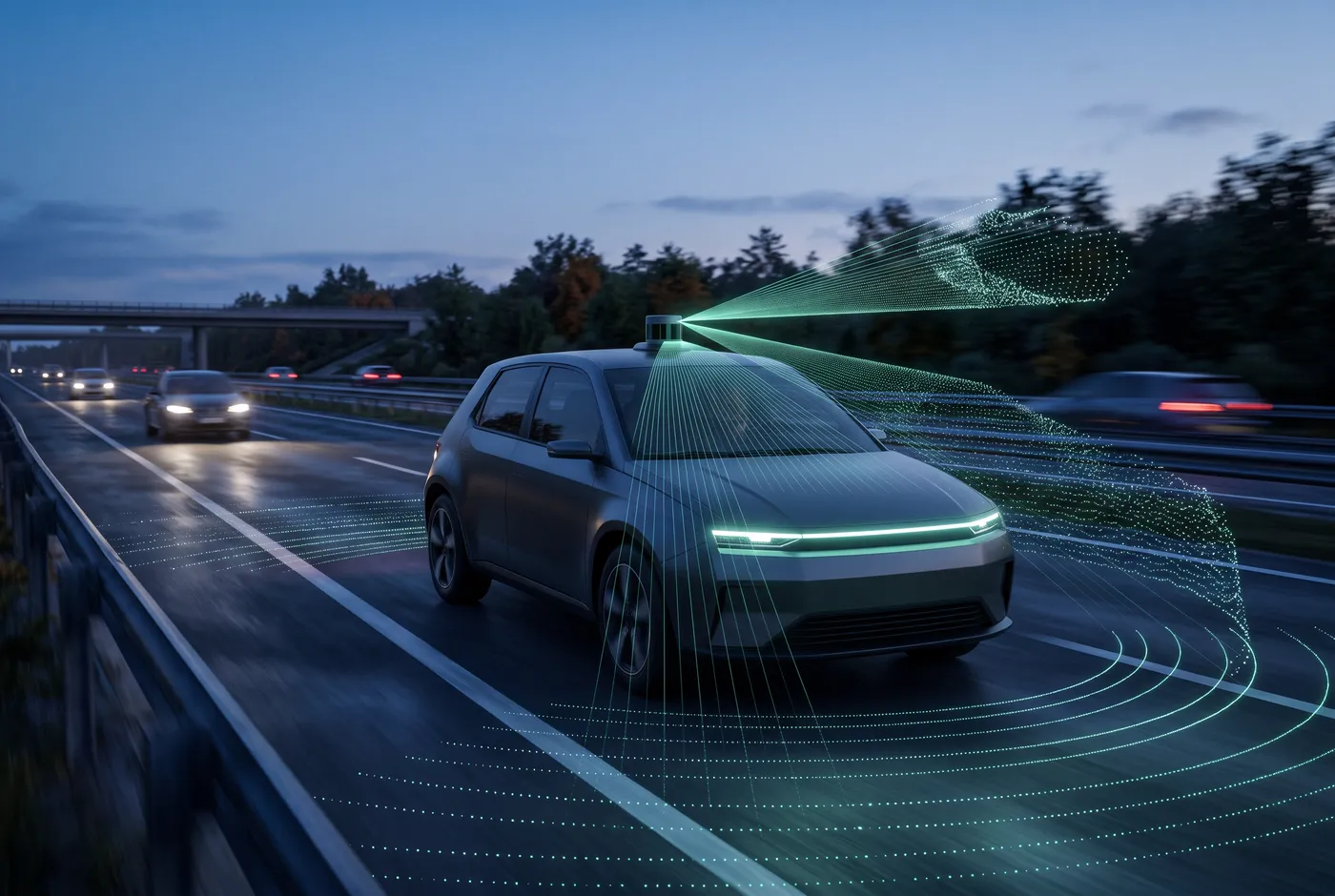

Manufacturers advertise with terms such as “pilot”, “assistant” or “autonomous”, often without saying clearly what a system can really do. A common language is provided by the SAE J3016 standard of the engineering association SAE International. It distinguishes levels 0 to 5. The decisive question at every level is: who monitors the drive, the human or the system?
Levels 0 to 2: the human drives
- Level 0 (no automation): the human steers, brakes and accelerates. Warning systems such as a blind spot warning help, but do not intervene continuously.
- Level 1 (assisted driving): a system takes over either longitudinal control, such as adaptive cruise control, or lateral control, such as lane keeping assistance.
- Level 2 (partially automated driving): the system steers and controls the speed at the same time. But the human must monitor constantly and be able to intervene immediately.
At these levels, the person at the wheel remains fully responsible. Even if the car keeps itself in lane on the motorway for long stretches, eyes on the road and responsibility remain with the human. Many misunderstandings arise because well-functioning Level 2 systems suggest more capability than they have. Modern systems therefore use sensors in the steering wheel or interior cameras to check whether the person at the wheel is paying attention, and warn of distraction.
Level 3: the system drives, but under conditions
From Level 3, the distribution of roles changes. Within defined operating conditions, the system takes over the driving task completely and monitors the surroundings itself. The person at the wheel may turn away, for example to read messages. But they must remain alert enough to take over control without delay when the system asks them to or when the conditions are clearly no longer met. In Germany, this is set out in Section 1b of the Road Traffic Act (StVG).
In Germany, the first Level 3 systems have been approved. They work on motorways, only up to a defined maximum speed and only under conditions set by the manufacturer, for example regarding weather or traffic. A typical use case is dense, slow-moving traffic, where driving is particularly monotonous. If the vehicle leaves this framework, it requests a takeover with advance warning.
Levels 4 and 5: driverless
At Level 4, the system drives entirely by itself within a defined operating area, even without a person who could intervene. If it reaches its limits, it brings the vehicle into a safe state on its own. Unlike Level 3, nobody on board needs to be ready to take over. Examples are driverless shuttles on fixed routes or automated parking in specially equipped car parks. Germany created a legal framework for this in 2021: vehicles with an autonomous driving function may operate in approved operating areas, monitored by a technical supervisor.
Level 5 describes a vehicle that drives everywhere and under all the conditions in which a human could also drive. A steering wheel and pedals would be superfluous. Such systems do not yet exist in series operation.
Who is responsible?
Put simply: up to Level 2, the person at the wheel is responsible for the drive, even if an assistant is active. At Level 3 they may turn away but remain obliged to take over. From Level 4, the driving task shifts to the system, monitored by the operator and the technical supervisor. Irrespective of this, in Germany the keeper is generally liable for damage arising from the operation of their vehicle; that is what compulsory motor liability insurance is for. In the event of system errors, the manufacturer may also be liable. In individual cases, insurers and courts decide. For specific questions, legal advice can help. Why higher levels are above all a question of software and computing power is shown in the article Software-defined vehicle.
The owner’s manual states the conditions under which a system works. Marketing names say little about the actual level.
GlossaryFrom AC charging to cell chemistry: terms explained in brief.Frequently asked questions
Is a Level 3 car an autonomous car?
Not in the strict sense. It only drives itself under defined conditions and needs a person who takes over on request. Only Levels 4 and 5 are driverless.
Can I look at my smartphone with Level 2?
No. With Level 2 you must monitor traffic constantly and be able to intervene at any time. That applies even when the system steers and brakes for periods.
Who pays in an accident with an active assistance system?
In Germany, the keeper’s motor liability insurance initially covers the injured parties. Whether the driver, the manufacturer or others are liable later depends on the individual case.