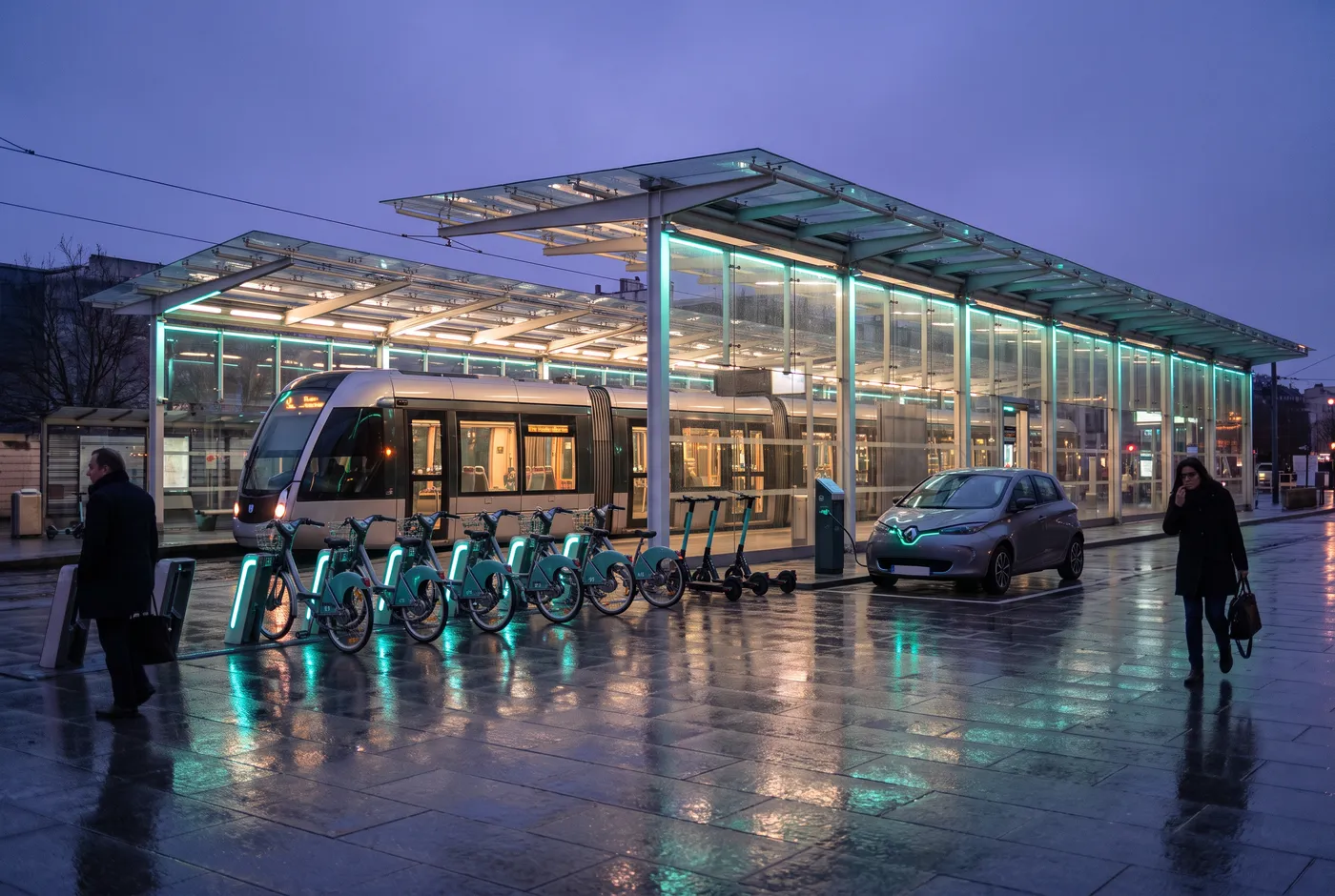

Many journeys cannot be made optimally with a single mode of transport. Driving into the city centre often means traffic jams and hunting for a parking space; taking the bus out into the countryside means long waits. Travelling multimodally means choosing the right mode for each journey or combining several on one route. That often saves time and money and makes you more independent. You do not need to switch overnight. It is often enough to rethink individual journeys: the commute, the trip to sport or the weekend outing.
The building blocks and their strengths
- Rail and bus: strong on commuter routes, in metropolitan areas and over distances where the travel time can be put to good use. Weaker in sparsely populated regions and at off-peak times.
- Bike and e-bike: ideal for distances of up to a few kilometres and for getting to the stop. An e-bike considerably increases range and comfort.
- Car sharing: for shopping, outings or transporting things when a car is only needed occasionally. Station-based services are easy to plan; vehicles spread freely across the operating area suit spontaneous one-off trips.
- E-scooters: for short journeys, especially the last mile from the stop to the destination. They are not well suited to longer distances or luggage.
- Your own car: unbeatably flexible with luggage, children, rural routes and journeys at unusual times.
The Deutschlandticket as a foundation
In Germany, the Deutschlandticket has made local public transport much simpler. The subscription is valid nationwide on buses, trams, underground and suburban trains and second-class regional trains. Fare boundaries between transport associations therefore no longer matter for many journeys. Long-distance trains are not included, and taking a bike along is regulated differently depending on the region and often costs extra. The transport companies provide the current price and conditions. Anyone who only uses buses and trains occasionally should check whether single or multi-journey tickets are cheaper; that depends on where you live and how often you travel.
How the building blocks work together
The strength lies in the connections. Park and ride links the car in the countryside with the train into the city. Bike and ride makes the bike the feeder, ideally with secure parking at the station. Mobility hubs bring together a stop, rental bikes, car sharing and charging points in one place. If you drive electric, some park and ride sites let you charge while you continue by train. For commuters in rural areas, the combination of car or bike to the station and train into the city is often the fastest solution. In the city itself, bike, rail and occasional car sharing replace your own car for many journeys.
Your own car also remains part of the system. Some households can manage with one vehicle fewer if car sharing covers the peaks. Others keep their car but use it more selectively. What your own vehicle really costs over the years (from depreciation to energy) can be estimated with the cost calculator. Which vehicle class suits your remaining needs is explained in the article Vehicle classes.
Cost calculatorElectric or combustion: compare the total cost over the time you own the car.Planning tips
- Journey planner apps from transport associations and rail operators often already combine several modes of transport and show real-time data.
- For recurring journeys, test several options once, such as bike plus train versus car, and compare time, cost and stress.
- Register with car sharing and bike rental providers in advance, as driving licence checks and payment details take time.
- In rural areas, ask about dial-a-ride buses and on-demand services, which supplement scheduled services in many places.
- Allow a buffer when changing, especially if different companies are involved and connections are not coordinated.
- With e-scooters, observe the rules: in Germany they belong on cycle paths or, where there are none, on the road, not on the pavement.
For your commute, it is worth asking about a job ticket. Many employers in Germany subsidise the Deutschlandticket.
Frequently asked questions
Is the Deutschlandticket valid on long-distance trains?
No. It is valid on local transport, meaning buses, trams, underground and suburban trains and regional trains. A separate ticket is needed for long-distance trains.
Is car sharing worth it instead of owning a car?
That depends mainly on your mileage and what is available locally. If you drive rarely and have good bus and rail connections, car sharing often works out cheaper than owning a vehicle.
Can I take an e-scooter on a bus or train?
Transport companies regulate this differently. Before travelling, it is worth checking the conditions of carriage of the transport association in question.